






Chest Fly Machines Explained: Leverage, Pec Deck & Cable for Maximum Pec Growth
When it comes to building a well-defined, powerful chest, pressing movements like the bench press are only half the equation. To truly maximize hypertrophy and create a symmetrical chest, isolation movements that leverage horizontal adduction—the primary anatomical function of the pectoralis major—are essential.
The movement that rules this category is the Pec Fly. However, walking into a modern gym can feel overwhelming due to the sheer variety of equipment available. Should you use a plate-loaded leverage machine, a classic seated pec deck, or a functional cable trainer?
While all three variations target your chest, they manipulate biomechanics, planes of motion, and tension curves differently. Utilizing the commercial-grade innovations from Muscle D Fitness, we break down the science behind the three major categories of fly machines to help you optimize your chest training.
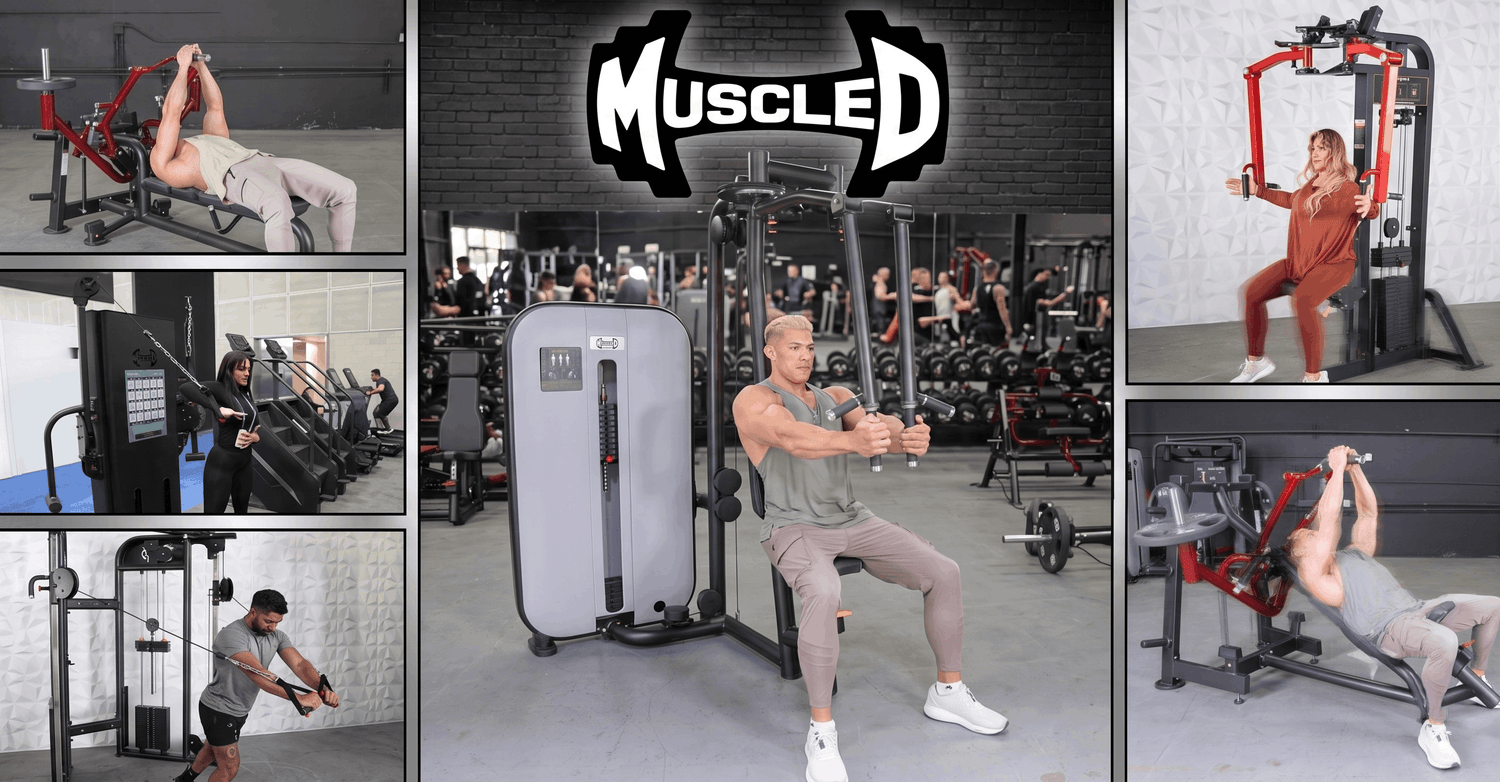
1. Plate-Loaded Leverage Chest Fly Machines
Best For: Heavy overload, joint-friendly motion paths, and targeted regional hypertrophy.
Plate-loaded leverage machines use a rigid arm system connected to a pivot point. Unlike free weights, where gravity determines the direction of resistance, leverage machines utilize engineered cam or pivot profiles to keep the chest under optimal mechanical tension throughout the entire range of motion.
Muscle D Fitness offers specific angular variations in this category to manipulate which muscle fibers are recruited based on the orientation of your torso:
-
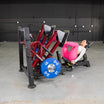
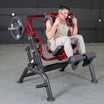
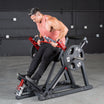
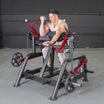
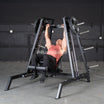
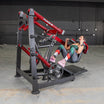
Incline Variation: The Muscle D Power Leverage V2 Incline Pec Fly positions the body at an upward angle. Electromyography (EMG) studies, such as the landmark research by Trebs et al. (2010), confirm that inclining the torso shifts neural drive and muscular tension significantly upward toward the clavicular head (upper chest).

-
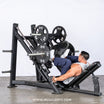
Decline Variation: The Muscle D Power Leverage V2 Decline Chest Fly angles the body downward. Biomechanical research (Glass & Armstrong, 1997) shows that decline angles maximize motor unit recruitment in the costal and sternal heads (lower and mid-chest) while reducing strain on the anterior deltoids.

-
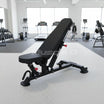
Lying (Flat) Variation: The Muscle D Power Leverage V2 Lying Pec Fly mimics a traditional flat dumbbell fly but removes the dangerous drop-off in tension at the top of the movement, providing balanced, foundational stimulation across the entire pectoralis major.

The Scientific Advantage of Leverage Fly Machines
Leverage machines allow for progressive overload with heavy weight without requiring the stabilizing energy of smaller, secondary muscles. Furthermore, independent unilateral arms ensure that dominant sides cannot overcompensate, directly addressing and correcting muscle asymmetries over time.
2. Seated Pin-Selected Pec Deck Machines
Best For: Maximum mechanical isolation, peak contraction, and strict form.
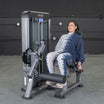
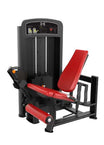
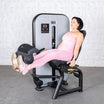
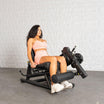
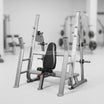
The traditional selectorized "Pec Deck" or butterfly machine features an upright seated position with handles or pads that move along a completely fixed, horizontal track. High-quality commercial examples from Muscle D Fitness include:


Both machines double as rear deltoid trainers, adding extreme versatility to any gym floor layout.
The Scientific Advantage of the Pec Deck
Because your back is firmly stabilized against a vertical pad, you don't spend energy balancing your torso or controlling the flight path of the weight. This allows you to achieve absolute isolation of the pectoralis major.
In a comprehensive independent study commissioned by the American Council on Exercise (ACE), researchers measured the EMG activity of various chest exercises. The pec deck machine emerged as one of the most effective isolation movements, achieving 98% of the muscle activation found in the barbell bench press. Because it maintains strict horizontal adduction in a single plane, it forces the chest to do 100% of the work—making it incredibly effective for achieving a powerful peak contraction, executing drop sets, and training safely to failure.
3. Cable Flies on Dual Adjustable Pulleys & Functional Trainers
Best For: Constant tension throughout the range of motion, core stabilization, and ultimate versatility.
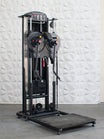
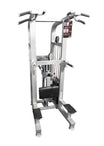
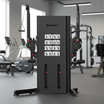
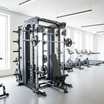
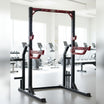
Cable fly variations take you out of a fixed machine track and place you into a three-dimensional environment. Because cables rely on a pulley system, the resistance vector is determined by the direction of the cable—not gravity. Commercial gyms rely on heavy-duty cable platforms like:


The Scientific Advantage of Cable Fly Machines
Cables solve the primary flaw of the dumbbell chest fly. With dumbbells, tension is highest at the bottom (stretch) position but drops to near zero at the top when the weights are stacked over the joints. Pulleys maintain continuous, uniform tension throughout the entire range of motion—from the deep stretch all the way to the peak contraction where your hands meet.
Because cable flies are performed standing without a back pad, your body must counter-balance the forward pull of the weight, forcing an isometric contraction of your core stabilizers and lower body. The ACE fitness study also highlighted bent-forward cable crossovers as a top-tier chest developer, yielding 93% muscle activation.
Adjustable pulleys also grant complete freedom of movement. Shifting the pulleys to a high setting and flying downward targets the lower chest. Shifting the pulleys to a low setting and flying upward targets the clavicular upper chest—making a single functional trainer a total chest-building solution.
Summary: Which Chest Fly Machine Should You Choose?
| Machine Type | Key Muscle Target | Biomechanical Benefit | Ideal Use Case |
|---|---|---|---|
| Plate-Loaded Leverage Flys (Incline / Decline / Lying) | Angle-specific regional targeting (Upper, Mid, Lower Pecs) | Heavy progressive overload with an optimized strength curve | Hypertrophy phases focused on correcting structural weak points |
| Seated Selectorized Pec Decks (Classic V2 / Vogue) | Strict isolation of the sternal head of the Pectoralis Major | Zero stabilizer requirement; 98% EMG muscle activation | Maximizing mind-muscle connection, drop sets, and safe failure training |
| Cable / Functional Trainers (DAP / Megatron) | Complete Pectoralis Major + Core Stabilizers | Constant, uninterrupted tension and multi-angle versatility | Functional strength, high-volume finishing movements, and metabolic burnout |
To build a complete, multi-dimensional chest, a smart training program shouldn't rely on just one machine. Combining the heavy overload capabilities of Muscle D Power Leverage Machines, the strict isolation of the Vogue Pec Deck, and the constant, fluid tension of a Dual Adjustable Pulley ensures that every single muscle fiber in your chest is pushed to its absolute growth potential.
Scientific References
- Trebs, A. A., et al. (2010). An electromyographical analysis of 3 different angles of the incline bench press. Journal of Strength and Conditioning Research.
- Glass, S. C., & Armstrong, T. (1997). Electromyographical Activity of the Pectoralis Muscle During Incline and Decline Bench Presses. Journal of Strength and Conditioning Research.
- Schanke, W., et al. (2012). Top 3 Chest Exercises: American Council on Exercise (ACE) Sponsored Study. (EMG Analysis of Pectoralis Major Activation).


Leave a comment
All comments are moderated before being published.
This site is protected by hCaptcha and the hCaptcha Privacy Policy and Terms of Service apply.