






Unleash Leg Growth: What Muscles Does the Pendulum Squat Target?
If you're looking to build massive, defined legs while protecting your spine, it's time to step up to the Pendulum Squat.
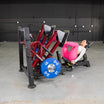
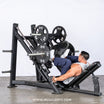
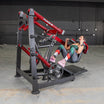
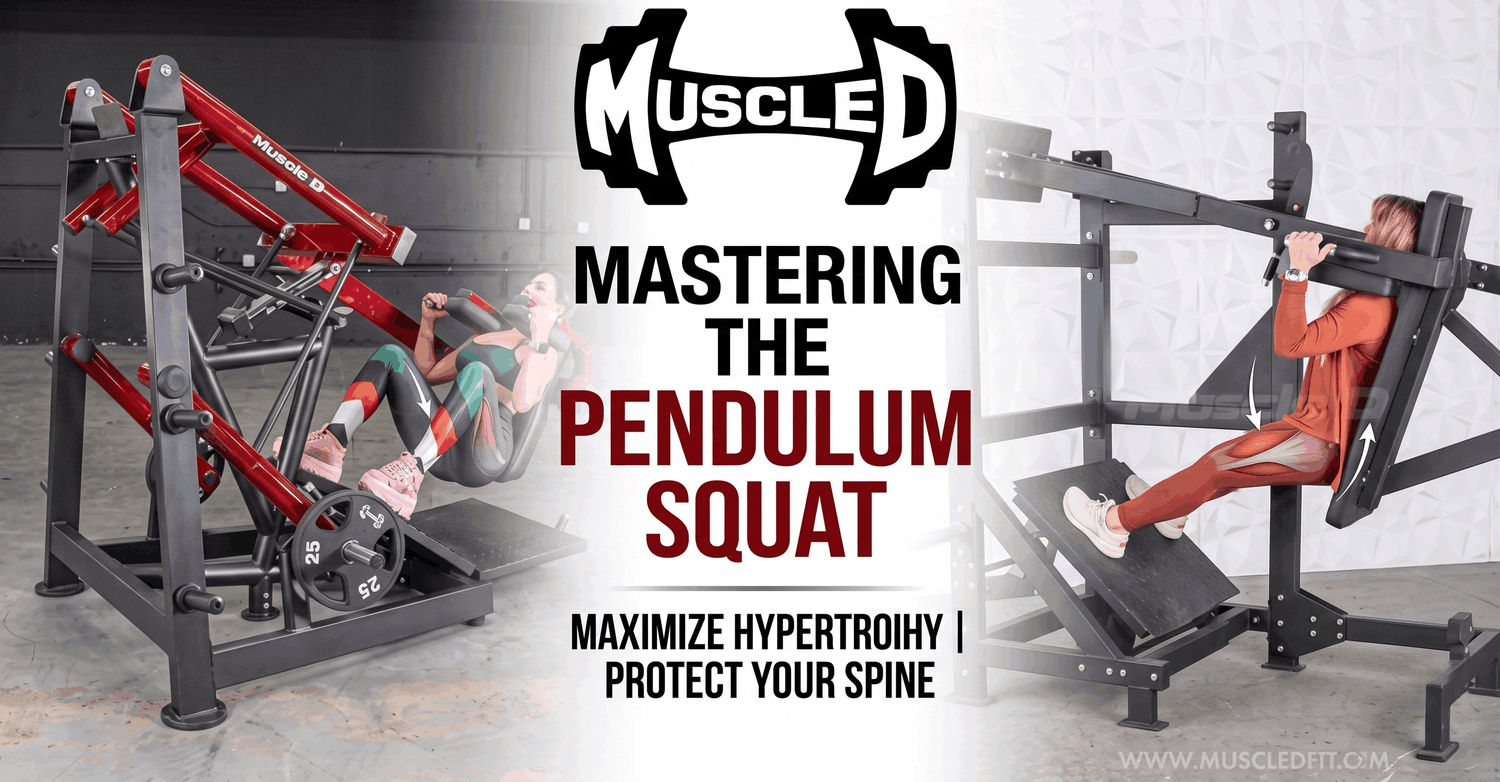
The pendulum squat is a highly effective, machine-based compound exercise that primarily targets the quadriceps while heavily involving the glutes and adductors as secondary movers. Because the machine guides you through a unique arcing motion and supports your back against a pad, it maximizes leg hypertrophy while significantly reducing stress and axial loading on your lower back.
Whether you are designing a high-volume leg workout or targeting specific lower-body imbalances, understanding which muscles are engaged—and how to isolate them—will help you get the absolute most out of every rep.
Primary Muscle Targets
1. Quadriceps
The quads are the ultimate winner of the pendulum squat motion. The upright torso position and deep knee flexion intensely fire all four heads of the quad complex:
- Vastus Lateralis — The outer quad, responsible for sweep and width.
- Vastus Medialis (VMO) — The lower inner “teardrop” muscle near the knee.
- Vastus Intermedius — Deep muscle sitting underneath the rectus femoris.
- Rectus Femoris — The front-center quad muscle running down the length of the thigh.
2. Gluteus Maximus
Your glutes are heavily recruited throughout the exercise, particularly at the very bottom of the squat where the muscle experiences a deep, loaded stretch.
Secondary and Stabilizing Muscles
While your quads and glutes take center stage, several key secondary muscles contribute to movement quality and power:
- Adductors — The inner thigh muscles work actively to assist and stabilize your legs through a deep range of motion.
- Hamstrings — Secondary players that help stabilize your knees and assist the glutes as you drive up from the bottom.
- Calves — The gastrocnemius and soleus work isometrically to stabilize your feet and ankles on the footplate.
- Core — Your abdominal and trunk muscles engage to maintain steady posture against the backpad, though to a much lesser degree than with a traditional barbell squat.
Shifting Focus via Foot Placement
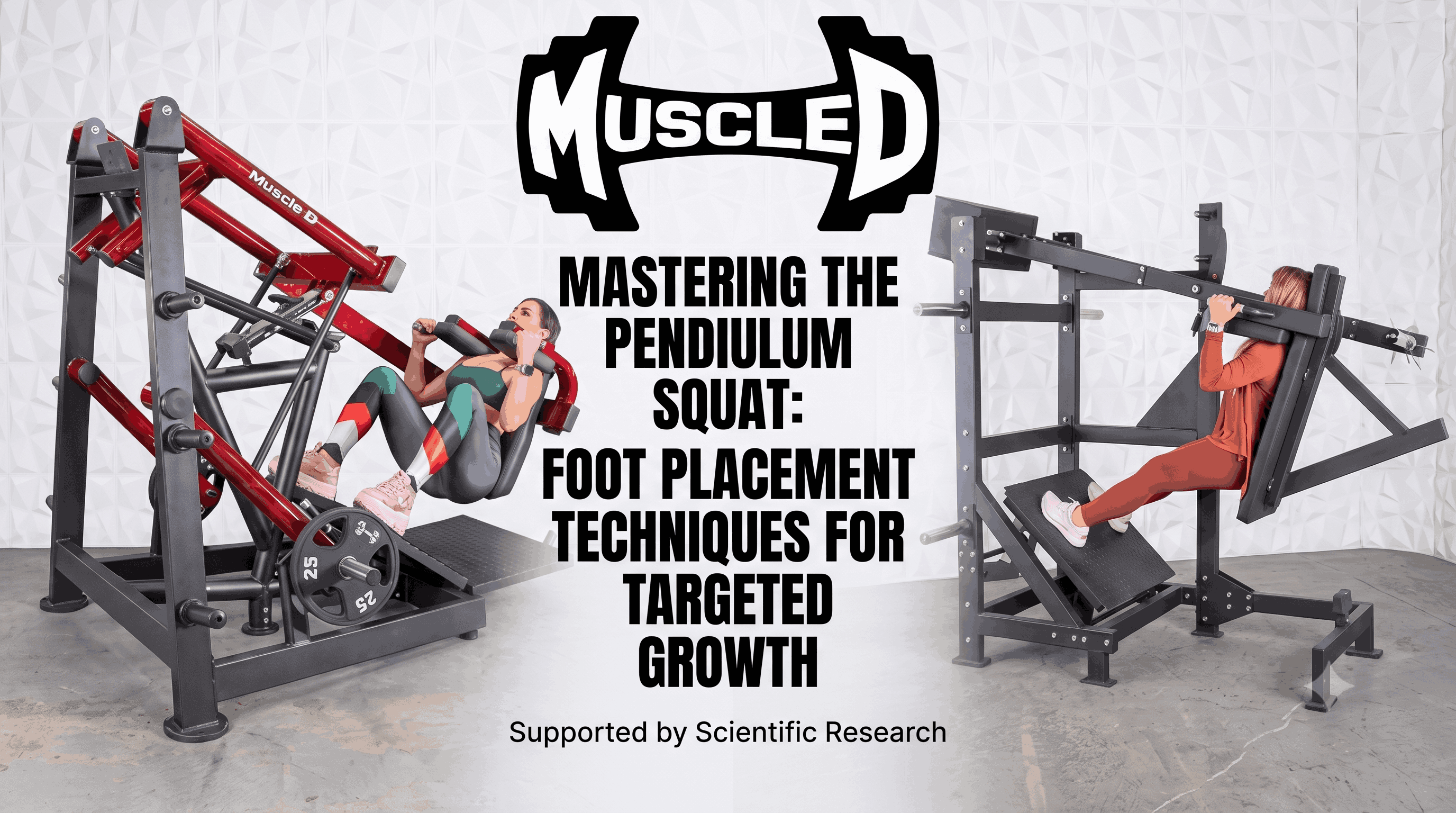
One of the greatest advantages of the pendulum squat machine is footplate versatility. By altering your stance, you can shift tension to prioritize specific areas of your lower body:
- Lower Foot Placement — Increases knee travel forward over your toes, drastically shifting the load onto your quadriceps.
- Higher / Wider Foot Placement — Allows you to push your hips back further into the pad, shifting more work to your glutes and hamstrings.
Upgrade Your Leg Day with Muscle D Fitness
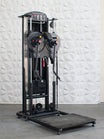
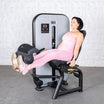
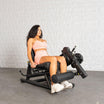
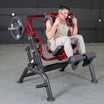
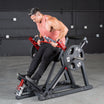
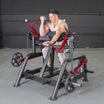
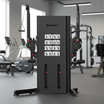
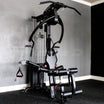
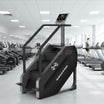
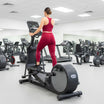
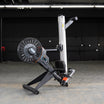
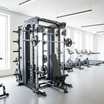
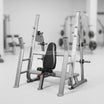
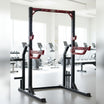
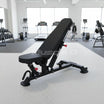
At Muscle D Fitness, we engineer commercial-grade leverage equipment designed for optimal biomechanics, maximum comfort, and heavy-duty durability. To add the unmatched hypertrophy benefits of the pendulum squat to your facility or home gym, check out our flagship models:


Summary
If your goal is deep knee flexion, maximum quad tension, and zero lower back strain, integrating a pendulum squat into your routine is a game-changer. Take control of your leg development today with equipment built to perform.
Scientific References
1. Deep Knee Flexion, Quad Hypertrophy & Glute Recruitment
Kubo et al. (2019) — European Journal of Applied Physiology
- Citation: Kubo, K., Ikebukuro, T., & Yata, H. (2019). Effects of squat training with different depths on lower limb muscle volumes. European Journal of Applied Physiology, 119(1), 193–203.
- Key Finding: Compared half squats to full deep squats (140° knee flexion) over 10 weeks of training.
- Support: While quad hypertrophy occurred across both depths, gluteus maximus and adductor growth were significantly greater in deep squats due to the loaded stretch at maximum depth.
Bloomquist et al. (2013) — European Journal of Applied Physiology
- Citation: Bloomquist, K., et al. (2013). Effect of squat depth on muscle cross-sectional area and max strength adaptations. European Journal of Applied Physiology, 113(8), 2133–2142.
- Key Finding: Deeper knee flexion resulted in significantly greater overall quadriceps hypertrophy (specifically in the vastus lateralis) compared to shallow squats.
- Support: Demonstrates that maximizing knee travel and range of motion—a hallmark of pendulum machine mechanics—directly drives quad hypertrophy.
2. Foot Placement & Muscle Shift (Biomechanical Leverage)
Escamilla et al. (2001) — Medicine & Science in Sports & Exercise
- Citation: Escamilla, R. F., et al. (2001). A biomechanical analysis of the squat exercise at different stance widths and foot placements. Medicine & Science in Sports & Exercise, 33(1), 127–141.
- Key Finding: Foot positioning alters joint moment arms at the knee and hip. Lower foot placement increases anterior knee displacement, elevating the knee extensor moment (quad stress). Higher foot placement increases hip flexion angle, shifting torque to the hip extensors.
- Support: Validates that lower foot placement shifts load to the quadriceps, while higher placement increases engagement of the glutes and posterior chain.
3. Spine Protection & Axial Loading Reduction
Schwanbeck et al. (2020) — Journal of Strength and Conditioning Research
- Citation: Schwanbeck, S. R., et al. (2020). Effects of free weight vs. machine-based strength training on muscle hypertrophy, strength, and systemic hormones. Journal of Strength and Conditioning Research, 34(12), 3327–3335.
- Key Finding: Machine-based multi-joint lower body exercises reduce spinal stabilization requirements and trunk muscle strain while maintaining high mechanical tension on target limb muscles.
- Support: Confirms that back-supported leverage machines stabilize the spine and reduce axial compression, allowing target muscles to be driven to failure with far less lower back strain than free-weight barbell loading.
Clark et al. (2012) — Journal of Strength and Conditioning Research
- Citation: Clark, D. R., Lambert, M. I., & Hunter, A. M. (2012). Muscle activation in the loaded free barbell squat and machine squat variations. Journal of Strength and Conditioning Research, 26(4), 1169–1178.
- Key Finding: Fixed-path leverage machines significantly lower erector spinae (lower back) activation compared to free-weight squats while keeping primary agonist (quadriceps) activation high.
- Support: Validates that back-pad-guided leverage machines minimize lower-back recruitment and axial load without compromising target leg engagement.

Leave a comment
All comments are moderated before being published.
This site is protected by hCaptcha and the hCaptcha Privacy Policy and Terms of Service apply.