










When in Doubt, Train More Back
If you've ever been stuck, strength stalled, shoulders cranky, posture slipping, deadlift feeling "off" - there's a simple rule that fixes more problems than it creates:
When in doubt, train more back.
That's not just gym-floor wisdom. It's supported by biomechanics and kinesiology through two big ideas: optimizing the Posterior Kinetic Chain (PKC) and building proximal stiffness, the ability to create a rigid, stable torso so force transfers cleanly through the body (Sciascia & Cromwell, 2012; Myer et al., 2014). In plain terms, a stronger back becomes the anchor that protects joints, improves posture, and lets you express more strength everywhere.
Why "more back" works (and why it works fast)
1) Proximal stiffness: the back is your strength amplifier
A strong back helps you stabilize more weight, which is exactly what biomechanists call proximal stiffness.
When your trunk and posterior torso are strong and stable, your body can transmit force like a solid bridge instead of a shaky ladder (Myer et al., 2014). That matters because:
- A stable torso lets your hips and shoulders generate more power.
- A weak back creates "energy leaks" through a flexing spine.
- When the spine feels unstable, your nervous system often down-regulates output to protect you, meaning you instantly lift less.
This is why back training doesn't just "build your back." It improves the quality of every rep you do in squats, presses, carries, hinges, and even athletic movement.
2) Shoulder and elbow health starts behind you
A lot of people treat shoulder and elbow pain like it's a rotator cuff or arm issue. But sports science often frames upper-body mechanics in terms of scapular control and the stability of the links "upstream" (Sciascia & Cromwell, 2012; Arghadeh et al., 2023).
Your back, lats, rhomboids, traps, and rear delts help determine where your shoulder blade sits and how it moves. If those muscles fatigue early, the scapula loses its "anchor," and smaller structures have to compensate. That's one reason elbow tendonitis and cranky shoulders show up in lifters who press a lot but don't row enough.
Translation: train your back, and your shoulders often feel better without you "rehabbing" anything.
3) The posterior chain is a protective sling for the whole body
The back doesn't just connect to the arms. It connects to the hips and legs through the thoracolumbar fascia, forming a functional sling between the latissimus dorsi and the opposite glute (Alizadeh et al., 2026). When that system is strong and coordinated:
- Your spine stays safer under fatigue.
- Your hips track better.
- Your knees and low back take less unwanted shear force (Bazrgari et al., 2006).
A strong back is not just "aesthetic." It's structural armor.
The "Train More Back" map: what to train (and why)
-
Upper back
- Major muscles: Rhomboids, traps, rear delts
- Injury prevention benefit: Helps stabilize the scapula; can reduce shoulder and elbow irritation
- Performance benefit: Builds a stable "shelf" for squats; improves bar path control
- Mid-back
- Major muscles: Lats, teres major
- Injury prevention benefit: Supports trunk stability and shoulder positioning
- Performance benefit: Improves force transfer and control in pulls, hinges, and presses
- Lower back
- Major muscles: Erector spinae, spinal stabilizers
- Injury prevention benefit: Resists rounding and unwanted spinal motion
- Performance benefit: Keeps you strong and upright under heavy loads
Your favorite machines (and how to use them to "train more back")
If you want to live the philosophy, you need tools that let you train the back hard, often, and safely—without beating up your joints or turning every session into a lower-back endurance test.
Here are eight machines that cover the full back, upper, mid, and lower, while keeping the stimulus high and the wear and tear low.
Rear delts and upper back: build the scapular anchor

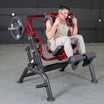
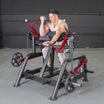
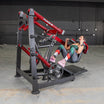
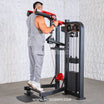
- Power Leverage V2 Rear Delt https://muscledfit.com/products/power-leverage-v2-rear-delt Use this to keep shoulders centered and strong. Think controlled reps, full range, and a hard squeeze at peak contraction.
Vertical pull + row combo: the "one station, full back" solution

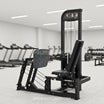
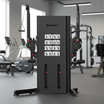
- Classic V2 Lat Pulldown / Low Row Combo https://muscledfit.com/products/classic-v2-lat-pulldown-low-row-combo This is a practical way to train the lats (pulldown) and mid-back (row) in one place. Great for facilities that want maximum variety without clutter.
Row variations: your mid-back and lat foundation

- Pro Strength Seated Low Row https://muscledfit.com/products/pro-strength-seated-low-row A staple for heavy, repeatable rowing volume. Keep the chest tall, drive elbows back, and don't turn it into a shrug.
- Vogue Diverging Low Row https://muscledfit.com/products/vogue-diverging-low-row-muscle-d-fitness-back-machine Diverging paths can feel more natural for many lifters and help you train hard without fighting joint angles.
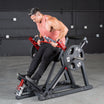
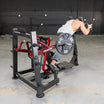
- Pro Strength Dynamic Row https://muscledfit.com/products/pro-strength-chest-supported-row When in doubt, choose chest support. It reduces lower-back fatigue so you can focus on pure back output—especially helpful if you also squat or deadlift that week.
- Pro Strength Convertible Linear Bearing Row https://muscledfit.com/products/pro-strength-convertible-linear-bearing-row Smooth, consistent resistance is ideal for accumulating quality reps. This is a great "volume builder" when you want to train back frequently.
- Excel Standing Multi-Grip T-Bar Row https://muscledfit.com/products/excel-standing-multi-grip-t-bar-row-muscle-d-fitness Multi-grip options let you bias lats vs. upper back. Use it for heavier sets when you want that dense, powerful mid-back stimulus.
Hinge pattern: train the back as a force-transfer engine

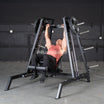
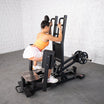
- Excel Multi-Function Deadlift Station https://muscledfit.com/products/excel-multi-function-deadlift-station This is where you build the "bridge." Deadlift variations strengthen the entire posterior chain and reinforce the stiffness that carries over to everything else.
A simple weekly template: "more back" without overthinking it
If you're already training 4–6 days per week, here's a clean way to apply the rule:
- 2 heavier back exposures/week (rows + hinge emphasis)
- 2 lighter back exposures/week (rear delts + pulldowns + chest-supported volume)
- 2 rear delt + External rotation
You don't need to annihilate yourself every time. You need frequency, quality reps, and variety across angles.
The takeaway
When you strengthen your back, you're not just building muscle. You're building the anchor for force transmission, posture, and joint preservation.
So if you're unsure what to prioritize, if your lifts feel unstable, your shoulders feel beat up, or your progress is stuck, default to the rule:
When in doubt, train more back.
References
- Alizadeh, S., et al. (2026). Persistent neuromuscular deficits in the posterior kinetic chain following hamstring strain injury: EMG insights from nordic hamstring curl, kettlebell swing, and supine sliding leg curl. BMC Sports Science, Medicine and Rehabilitation.
- Arghadeh, R., et al. (2023). Electromyography of scapular stabilizers in people without scapular dyskinesis during push-ups: a systematic review and meta-analysis. Frontiers in Physiology, 14.
- Bazrgari, B., Shirazi-Adl, A., & Arjmand, N. (2006). Analysis of squat and stoop dynamic liftings: muscle forces and internal spinal loads. European Spine Journal, 16(6), 687–699.
- Myer, G. D., et al. (2014). The Back Squat. Strength & Conditioning Journal, 36(6), 4–27.
- Sciascia, A., & Cromwell, R. (2012). Kinetic Chain Rehabilitation: A Theoretical Framework. Rehabilitation Research and Practice, 2012, 1–9.

Leave a comment
All comments are moderated before being published.
This site is protected by hCaptcha and the hCaptcha Privacy Policy and Terms of Service apply.