






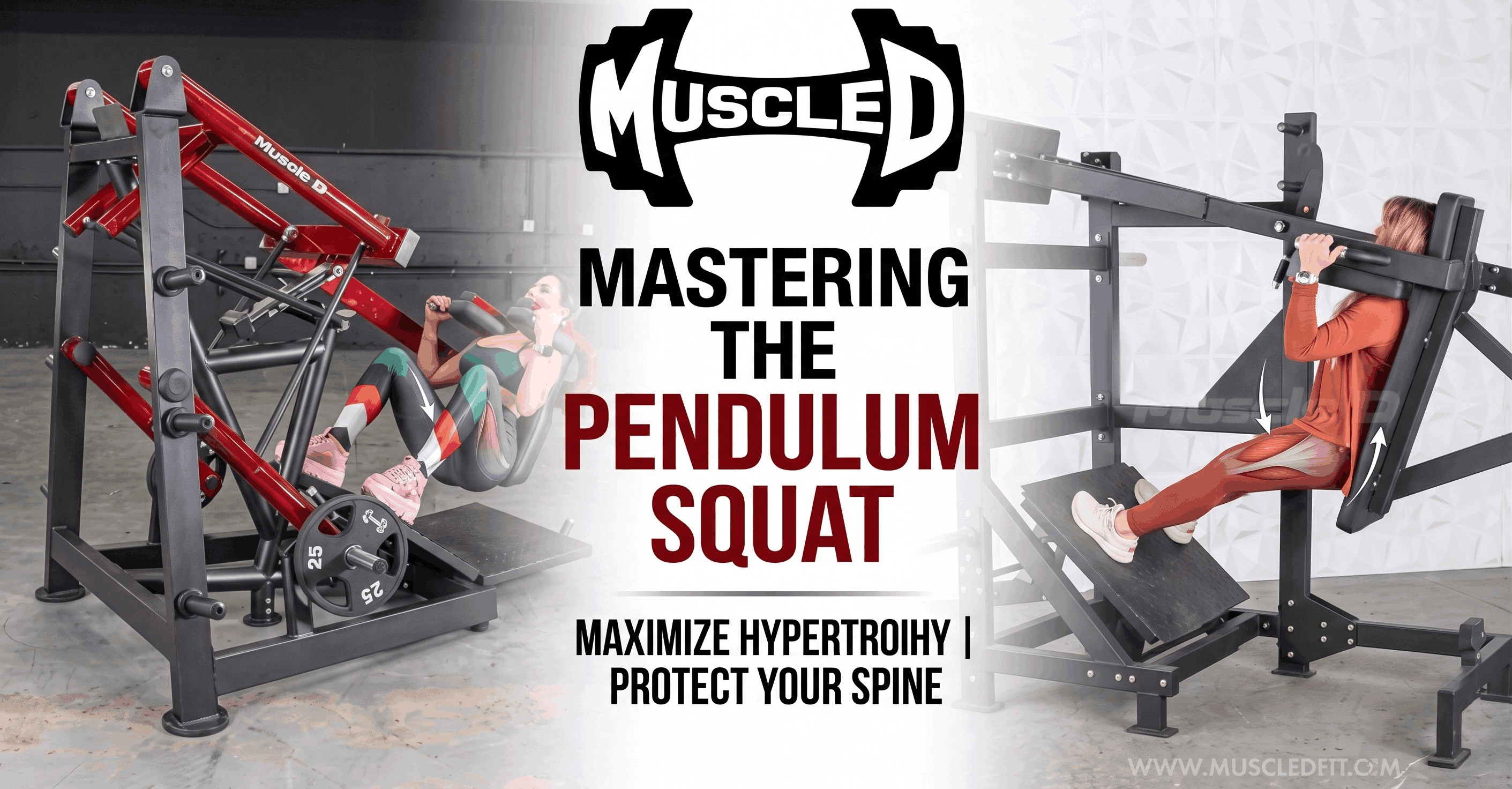
Mastering the Pendulum Squat: How Foot Placement Manipulates Biomechanics and Muscle Activation
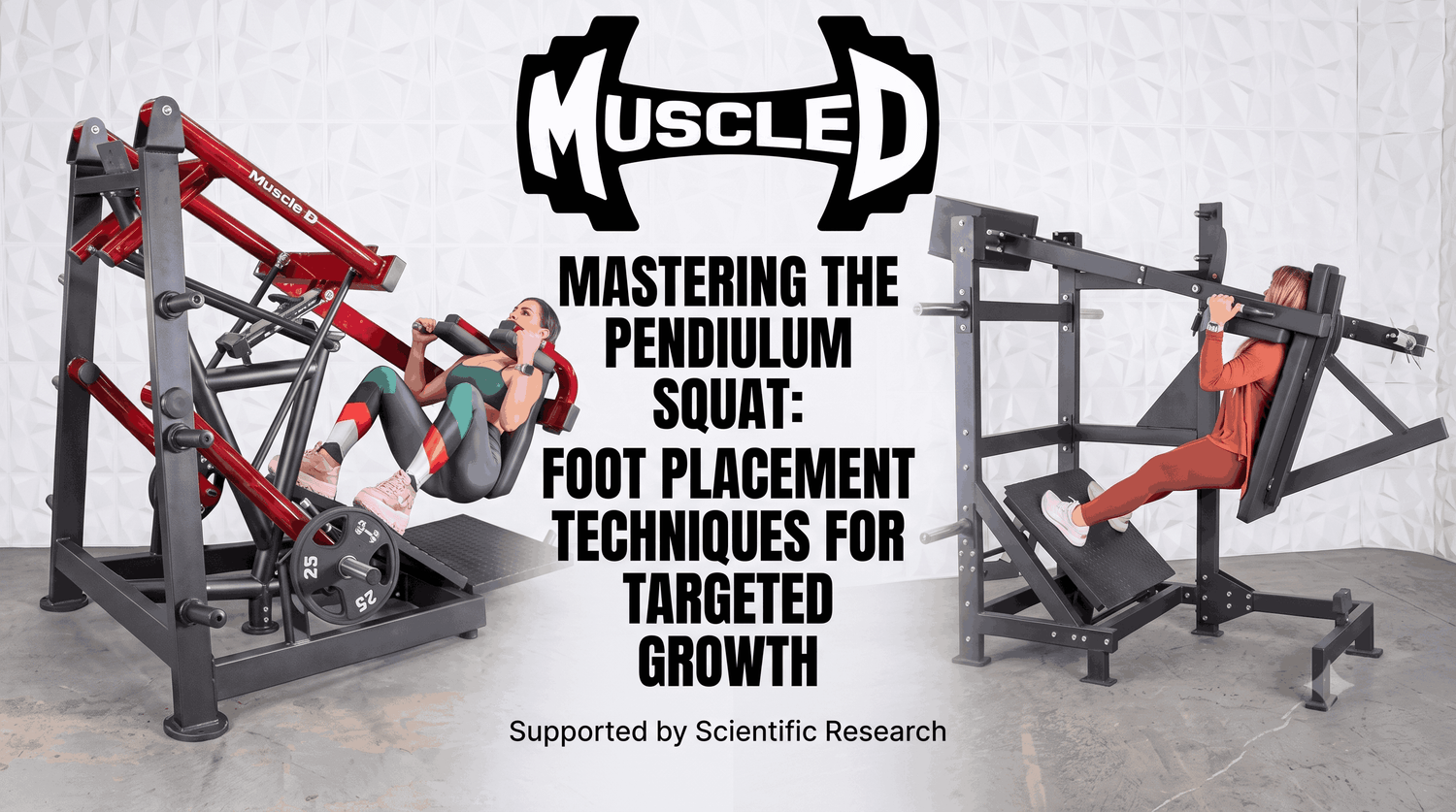
When it comes to lower-body hypertrophy, few pieces of strength equipment offer the unique mechanical advantage of the Pendulum Squat. Unlike a standard barbell back squat or traditional leg press, the pendulum squat operates along a fixed, counterbalanced arcing motion path. This subtle curve drastically alters how resistance is applied throughout the range of motion, providing intense mechanical tension at the bottom of the movement while easing shear stress on the lumbar spine.
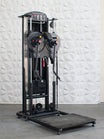
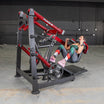
However, the machine itself is only half of the equation. To truly unlock the potential of machines like the Muscle D Fitness Excel Leverage Counterbalanced Pendulum Squat or the heavy-duty Muscle D Fitness Power Leverage V2 Pendulum Squat, you must understand how foot placement alters joint kinematics, moment arms, and targeted muscle recruitment.
In this article, supported by exercise science and electromyographic (EMG) research, we break down the exact foot placement techniques you can use on a Pendulum Squat to selectively bias your quadriceps, glutes, adductors, and outer thigh sweep.
The Science of Foot Placement & Arcing Biomechanics
Foot placement on a footplate fundamentally alters the mechanical leverage of any squat movement. In a free-barbell squat, foot placement changes how your center of mass interacts with gravity. On a Pendulum Squat, because the machine moves along a fixed, curved arc, moving your feet shifts the relative amount of flexion (bending) at your knees versus your hips.
Key Biomechanical Principles
- Knee Flexion & Quad Bias: Increasing forward knee displacement increases the moment arm between the knee joint and the line of force, placing greater relative load on the quad extensors (Bryanton et al., 2012).
- Hip Flexion & Glute/Posterior Bias: Restricting forward knee travel forces greater hip flexion and hip hinge mechanics, shifting mechanical tension toward the gluteus maximus (Escamilla et al., 2001).
- Stance Width & Adductor Recruitment: Expanding stance width in the frontal plane engages the adductor longus and adductor magnus to stabilize and extend the hip (McCaw & Melrose, 1999; Paoli et al., 2009).
1. Low Foot Placement (Quadriceps Bias)
Placing your feet on the lower third of the pendulum footplate maximizes forward knee travel and deep knee flexion.
- Primary Target: The entire quadriceps group, emphasizing the vastus medialis (the teardrop muscle) and vastus lateralis.
- Biomechanical Effect: This placement creates a sharp tibia-to-femur angle at the bottom of the movement. Because the pendulum's arc maintains tension at deep knee angles, it heavily stretches and loads the quads in their lengthened position — a key driver of hypertrophic stimulus (Schoenfeld, 2010).
- Scientific Insight: Research examining foot positions during squat variations demonstrates that setups promoting increased dorsiflexion and anterior knee travel produce higher quadriceps EMG activation and knee extensor moments compared to posterior-shifted setups (Frontiers in Physiology, 2026).
- Limiting Factor: This position demands significant ankle dorsiflexion mobility. If your heels begin lifting off the footplate, move your feet slightly higher or utilize weightlifting shoes with an elevated heel to protect the knee joint and maintain constant mechanical tension on the legs.
2. High Foot Placement (Glute and Hamstring Bias)
Positioning your feet on the upper section of the platform shifts the load up the posterior chain.
- Primary Target: Gluteus maximus, with secondary assistance from the hamstrings and the powerful adductor magnus.
- Biomechanical Effect: A high stance physically limits forward knee travel, transforming the movement into a hip-driven exercise. This maximizes hip flexion at the bottom of the pendulum's arc, placing the glutes under extreme stretch under load.
- Scientific Insight: EMG studies consistently show that increasing hip flexion relative to knee flexion elevates gluteus maximus recruitment (Paoli et al., 2009). Because the pendulum machine supports your back, you can achieve deep hip flexion without the spine-limiting factors often present in free-weight hip hinge movements.
- Limiting Factor: Placing your feet too high can cause pelvic tilt (butt wink), causing your lower back to lift away from the back pad at the bottom of the rep. Keep your lumbar spine firmly anchored against the backrest to prevent spinal shear. Flat, rigid-soled shoes are strongly recommended for this variation.
3. Wide Stance / Sumo Placement (Adductor Bias)
Spacing your feet wider than shoulder-width apart with your toes flared outward (20° to 30°) opens up the hip complex.
- Primary Target: Adductors (inner thighs) and the gluteus maximus.
- Biomechanical Effect: Turning your toes outward allows the femurs to abduct, enabling a deeper squat depth by altering hip socket geometry. This position deeply stretches the inner thigh musculature during the eccentric phase and relies heavily on the adductor group to contract during the concentric ascent.
- Scientific Insight: Classic biomechanical research by Paoli et al. (2009) and McCaw & Melrose (1999) confirmed that widening squat stance width significantly increases electrical activity in the gluteus maximus and adductor longus, while maintaining high overall quad engagement.
- Key Technique: Ensure your knees track directly in line with your toes throughout the motion to prevent medial knee collapse (valgus).
4. Middle Stance (Balanced Hypertrophy Foundation)
Placing your feet hip-to-shoulder width apart in the exact center of the platform acts as the universal default standard.
- Primary Target: Balanced overall lower-body development, naturally leaning quad-dominant due to the pendulum machine's inherent design.
- Biomechanical Effect: Offers an even distribution between hip and knee flexion. This allows most lifters to comfortably hit full depth while keeping their feet fully planted.
- Best Used For: Heavy overload sets, general leg strength progression, and high-volume hypertrophy work where overall leg mass is the goal.
5. Close Stance (Vastus Lateralis / Outer Sweep Focus)
A narrow stance on the Pendulum Squat isolates the outer thigh muscles by forcing movement strictly in the sagittal plane (front-to-back). By placing your feet within hip-width or completely touching, you alter the mechanical leverage and muscle recruitment profile.
- Vastus Lateralis Bias: Heavily emphasizes the outer sweep of the quadriceps.
- Minimal Adductor Recruitment: Bringing the feet close together reduces inner thigh engagement.
- Pure Sagittal Loading: Forces the hips and knees to track in a straight line without frontal plane abduction.
- Increased Knee Flexion: Restricting hip rotation shifts a larger percentage of the load directly onto the knee extensor mechanism.
- Ankle Mobility Demand: Requires exceptional ankle dorsiflexion to hit full depth without heel elevation.
- Reduced Abdominal Space: At the bottom of the arc, your thighs will press directly against your torso. Lifters with larger midsections may need to adjust depth or shift to a slightly wider stance to maintain a full range of motion.
Standard Foot Placement Comparison
| Foot Placement | Target Muscle Focus | Key Biomechanical Advantage | Mobility Requirement |
|---|---|---|---|
| Low Stance | Quads (Vastus Medialis/Lateralis) | Maximizes knee flexion & lengthens quads | High Ankle Dorsiflexion |
| High Stance | Gluteus Maximus & Hamstrings | Maximizes hip flexion & limits knee travel | Moderate Hip Mobility |
| Wide / Sumo | Adductors & Gluteus Maximus | Deep hip stretch & frontal stability | Hip Abduction Mobility |
| Middle Stance | Overall Quadriceps & Lower Body | Equalized torque across hip & knee joints | Moderate Ankle/Hip |
| Close Stance | Vastus Lateralis (Outer Sweep) | Pure sagittal plane knee extension load | Very High Ankle Mobility |
Equipment Choice: Optimizing Your Pendulum Squat Setup
To execute these foot placement variations safely and effectively, commercial and home gym facilities require leverage equipment engineered with precision arcs and heavy-duty footplates.

Muscle D Fitness Excel Leverage Counterbalanced Pendulum Squat: Features an ultra-smooth counterbalanced system that reduces starting resistance at the bottom of the movement, making it ideal for deep quad-focused low stance squats and rehab/hypertrophy protocols.

Muscle D Fitness Power Leverage V2 Pendulum Squat: Built for high-load durability, offering a spacious, multi-angle footplate that accommodates wide sumo stances, narrow outer-sweep placements, and high-step glute variations with rock-solid stability.
Practical Programming Takeaways
- Match Your Setup to Your Weak Points: If your quads lag behind your glute development, prioritize low or close foot placements early in your leg workouts when freshness is highest.
- Prioritize Range of Motion Over Load: The mechanical efficiency of the pendulum arc shines when utilizing full knee and hip bend. Choose a foot position that allows you to achieve maximum comfortable depth without spinal curvature.
- Footwear Matters: Wear hard-soled weightlifting shoes with an elevated heel for low or narrow stance quad bias, or flat minimalist shoes for high/wide stance posterior chain work.
By manipulating your foot position on a Muscle D Fitness Pendulum Squat, you can precisely tailor every leg workout to target specific muscle groups, optimize joint angles, and build complete lower-body hypertrophy backed by biomechanical science.
References
- Bryanton, M. A., et al. (2012). Effect of squat depth and barbell load on relative muscular effort in squatting. Journal of Strength and Conditioning Research, 26(10), 2820–2828.
- Escamilla, R. F. (2001). Knee biomechanics of the dynamic squat exercise. Medicine & Science in Sports & Exercise, 33(1), 127–141.
- McCaw, S. T., & Melrose, D. R. (1999). Stance width and bar load effects on surface electromyography of secondary movers during the back squat. Medicine & Science in Sports & Exercise, 31(3), 428–436.
- Paoli, A., Marcolin, G., & Petrone, N. (2009). The effect of stance width on the electromyographical activity of surface muscles during the back squat. Journal of Strength and Conditioning Research, 23(1), 246–250.
- Schoenfeld, B. J. (2010). Squatting kinematics and kinetics and their application to exercise performance. Journal of Strength and Conditioning Research, 24(12), 3497–3506.

Dejar un comentario
Todos los comentarios se revisan antes de su publicación.
Este sitio está protegido por hCaptcha y se aplican la Política de privacidad de hCaptcha y los Términos del servicio.