




The Evolution of Iron: How Muscle D Perfected the Plate-Loaded Back Machine
Back in the golden era of bodybuilding, training your back was as brutal on your spine as it was on your lats. If you wanted to do a T-Bar row, the standard solution was shoving one end of an Olympic barbell into a warehouse corner, piling plates onto the other side, and pulling. It was awkward to load, prone to slipping, and it demanded your lower back "pay the price" every rep.
When Brian Lewallen founded Muscle Dynamics in the 1970s, he set out to change that. The goal was simple: build strength equipment that delivers elite results, protects the lifter, and respects real human biomechanics.
Decades later—through Muscle Dynamics and into the modern Muscle D lineup—that mission hasn't changed. Here's how 40+ years of iron history evolved into the plate-loaded back machines serious gyms rely on today.
1. The Seated Row: From Game-Changer to Ergonomic Excellence
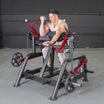
The seated row was born out of a need: train the lats, rear delts, and mid-back hard without turning every set into a lower-back endurance test. By putting the lifter in a stable, upright position, the movement became safer, more repeatable, and easier to progress.

The milestones
-
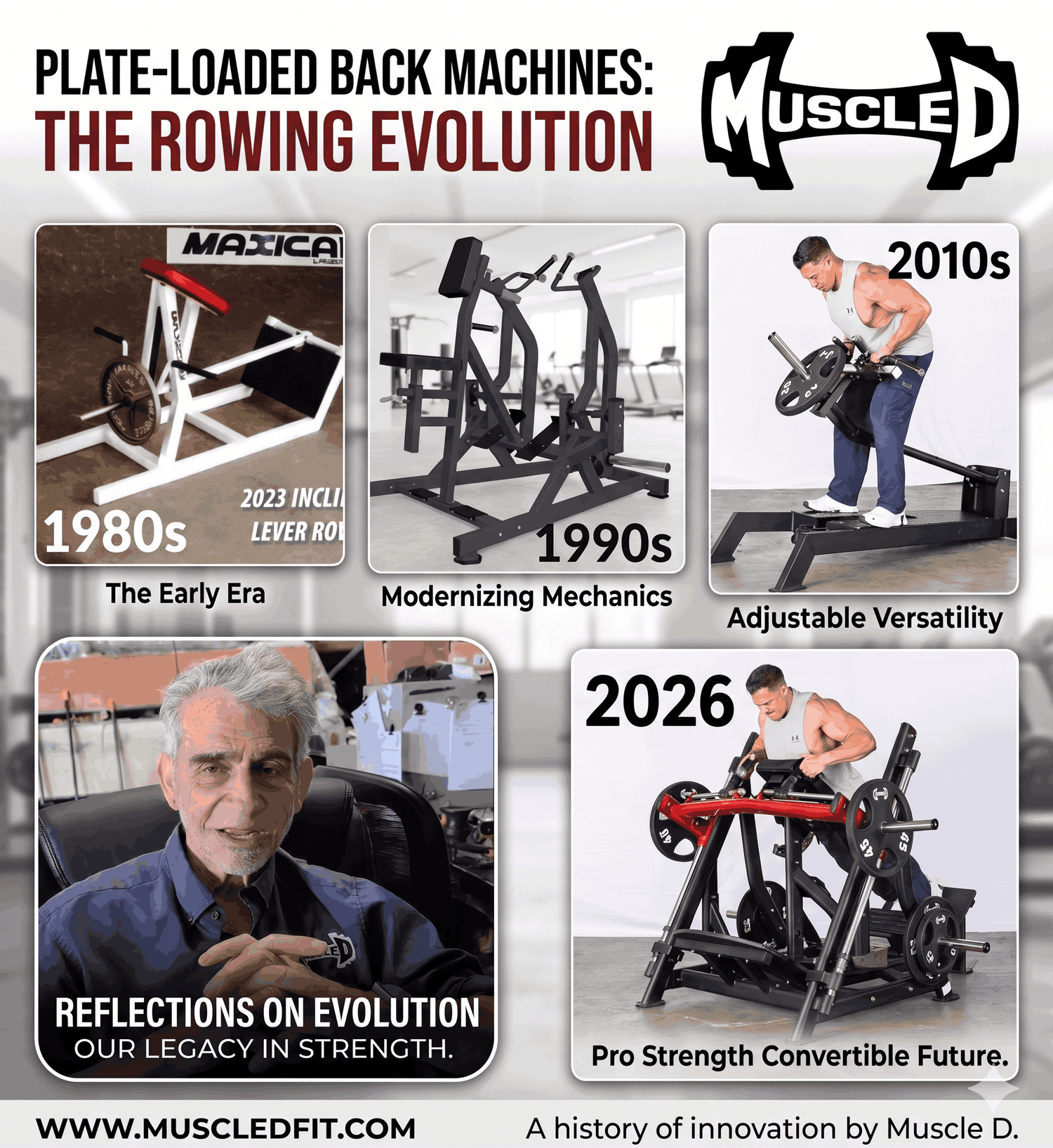
1980s: The Maxicam Seated Lever Row (Muscle Dynamics) – One of the early plate-loaded seated row concepts that helped reshape the gym floor.
- 1990s: Excel Seated Row – Brought iso-lateral training into the mix, letting lifters attack each side independently with multiple grip options.
- 2000s: Power Leverage Seated Row – Introduced a different feel through a top-pivot loading system and a distinct strength curve.
- 2022: Pro Strength Seated Row – Stripped back to raw output: big footplate, no chest pad, and a "pull heavy with control" feel.
- 2024: The Power Leverage V2 seated row lineup – Added modern refinements that make the movement smoother, stronger, and more consistent rep-to-rep.
Why it matters
Across every generation, the goal stayed the same: more back stimulus, less compensation. Better pivots, better handle options, and better stability mean you can train harder, recover faster, and keep your form honest.
2. Chest-Supported Rowing: 43 Years of Pure Isolation
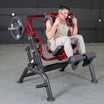
For lifters who want true upper-back focus, chest-supported rowing is the gold standard. Lock the torso into the pad, remove momentum, and force the lats, rhomboids, and mid traps to do the work.
As Brian recalls, early versions faced resistance—many lifters didn't love lying face-down on flat, uncomfortable benches. Dialing in the pad angle, height, and upholstery was a big part of making this style a mainstream staple.

The milestones
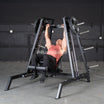
- 1980s: Incline Lever Row – Proved you could pull heavy with support and control.
- 1990s: Power Leverage T-Bar Row – Added multi-grip options and a more aggressive pulling angle.
- 2000s: Excel T-Bar Row – Refined ergonomics with improved upholstery and grip placement.
- 2010s: Excel Chest Supported T-Bar Row – Increased capacity and expanded fit across more body types.
- 2025: Power Leverage V2 Chest Supported Linear Bearing Row – Prioritized stability and a smooth track feel with integrated plate storage.
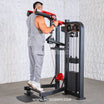
- 2026: Pro Strength Convertible Row – Built for versatility: standing or chest-supported linear bearing rowing with 360° rotating handles.
3. The T-Bar & Bent-Over Row: Engineering the Ultimate Pull
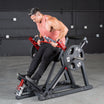
The free-weight bent-over row is legendary for building thickness—but it's also notorious for beating up the lumbar spine when fatigue sets in. Muscle Dynamics (and later Muscle D) engineered leverage-based solutions to deliver that "raw pull" feel while reducing unnecessary risk.

The milestones
- 1980s: Bent-Over Lever Row – Replaced the old "barbell in the corner" trick with a stable frame, a true pivot, and a dedicated foot platform.
- 2010s: Excel Standing Multi-Grip T-Bar Row – Expanded grip variety and fit for different shoulder widths.
- 2024: Excel Linear Bearing Row – Shifted the feel from a pivot arc to a linear track for more stability and a cleaner contraction.
- 2025: Power Leverage V2 Linear Bearing Row – Built for heavy commercial use with more handle variations to keep training fresh.
- 2026: Pro Strength Convertible Row – Merges the freedom of a standing row with the control of linear bearings.
The Core Philosophy: Straight Lines & Smarter Grips
Looking back at the evolution of these machines, Brian Lewallen points to two design pillars that separate good equipment from legendary equipment.
Optimizing the strength curve
"The number one thing is that you don't want too much of a curvilinear motion. You want a pull that feels like a relatively straight line. If the arc is too short or too curved, it forces the human body out of its natural line of power, which strains the joints and drops engagement on the target muscle."
Handle evolution
Early back machines offered one rigid grip. Today, Muscle D equipment uses multi-grip options and rotating handles—because every lifter's structure is different. When the wrist and elbow can find a stronger path, the back can do what it's supposed to do: pull hard.
Get Muscled with Muscle D
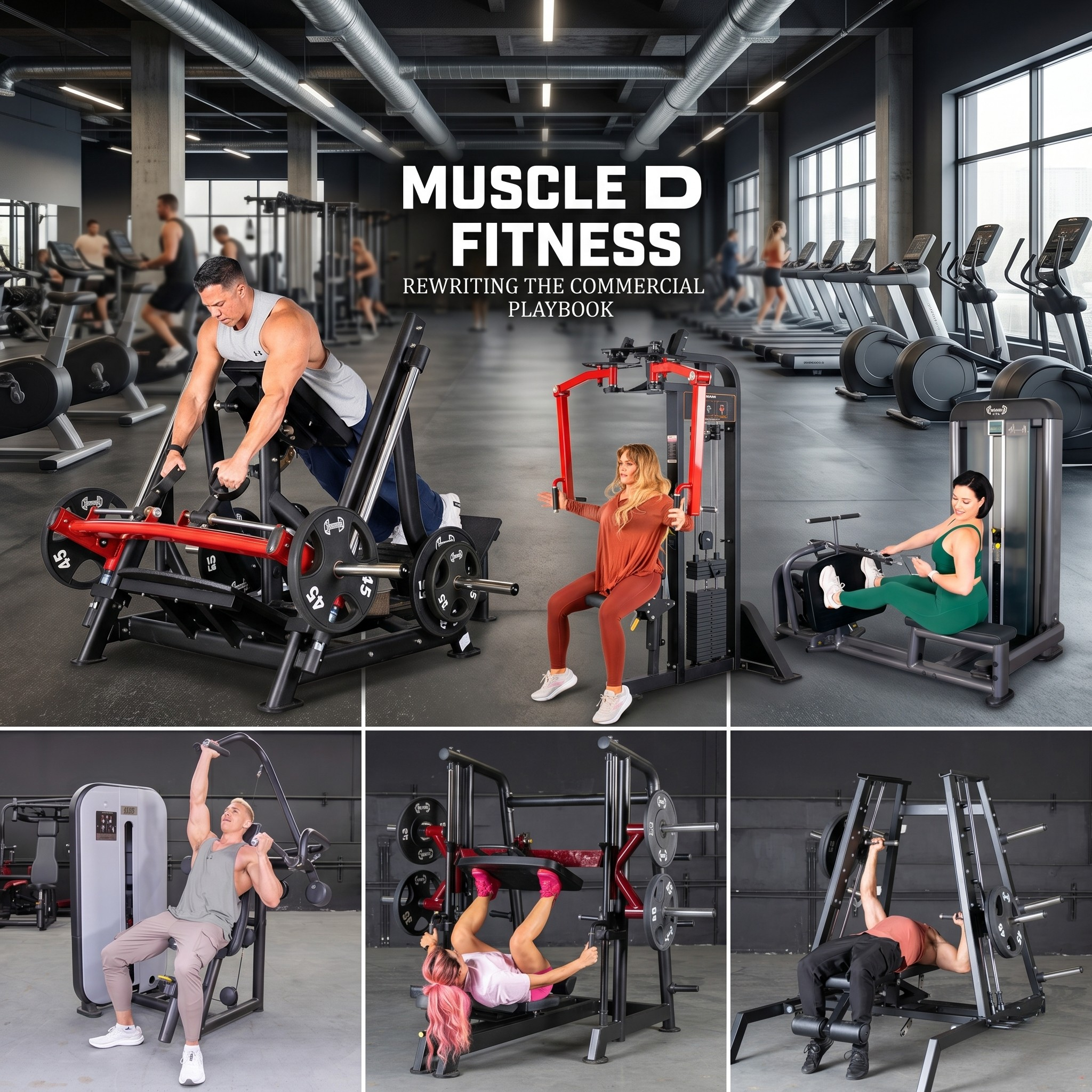
From welding the first leverage frames in the 1970s to using linear bearings and dual-hinge technology today, Muscle D has spent decades perfecting the art of the row. Every machine is built for serious lifters and serious facilities—where performance, durability, and repeatability matter.
Shop our current seated row lineup
- Excel Iso-Lateral Seated Row https://muscledfit.com/products/excel-iso-lateral-seated-row
- Pro Strength Seated Row https://muscledfit.com/products/pro-strength-seated-low-row
- Power Leverage V2 Iso-Lateral Seated Row https://muscledfit.com/products/power-leverage-v2-iso-lateral-seated-row-muscle-d-fitness
- Power Leverage V2 Dual Hinge Seated Row https://muscledfit.com/products/power-leverage-v2-dual-hinge-seated-row
- Power Leverage V2 Rotating Handle Low Row https://muscledfit.com/products/power-leverage-v2-low-row-muscle-d-fitness

Dejar un comentario
Todos los comentarios se revisan antes de su publicación.
Este sitio está protegido por hCaptcha y se aplican la Política de privacidad de hCaptcha y los Términos del servicio.