
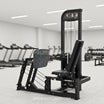
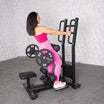
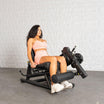
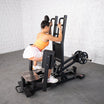




When it comes to building a well-defined, powerful chest, compound pressing movements like the bench press are staple exercises. However, to truly isolate the pectoralis major and minimize the involvement of secondary movers like the triceps brachii, the single-joint pectoral fly is unmatched (Rocha Júnior et al., 2007).
By eliminating elbow extension, the pectoral fly maximizes horizontal adduction of the glenohumeral joint, placing direct tension on the chest fibers (Rocha Júnior et al., 2007). To get the most out of your chest workouts without risking injury, mastering your form across different variations is crucial.
Section 1: Lying Pectoral Fly Machines (Flat, Incline, and Decline)
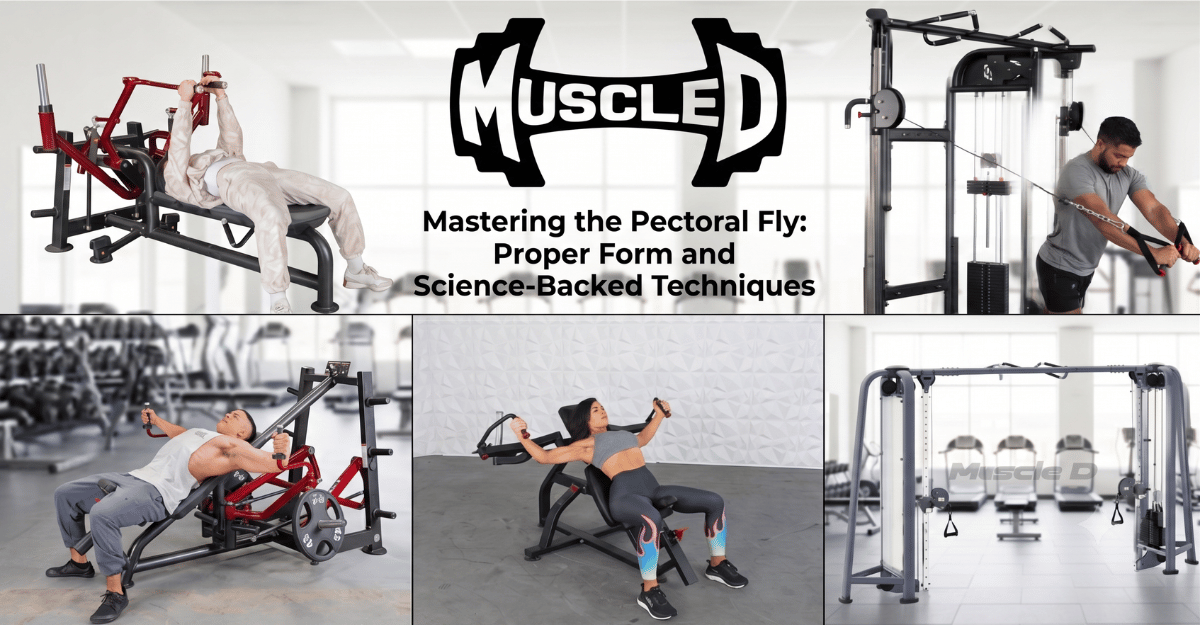
Lying machine flys provide a massive advantage over traditional dumbbell flys. Dumbbells lose tension at the top of the movement due to gravity, whereas plate-loaded machines leverage a mechanical profile that keeps constant tension on the pectoralis major throughout the entire range of motion (Bergquist et al., 2018). Adjusting the angle of the bench shifts the mechanical line of pull, allowing you to target different regions of the chest.
1. The Flat Pec Fly
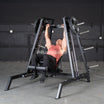
- The Machine: Power Leverage V2 Lying Pec Fly
- Target Region: Sternal (mid-chest) portion of the pectoralis major.
- Proper Form & Technique: Lie flat on your back with your feet planted firmly on the floor to stabilize your pelvis. Ensure your shoulder blades (scapulae) are retracted and depressed (squeezed down and back) into the pad. This creates a stable platform and pushes the chest forward, preventing the anterior deltoids from dominating the movement. Grip the handles with a slight bend in your elbows (approx. 10–15 degrees) and maintain this static angle throughout the duration of the set. Bring your hands together in a wide arcing motion, squeezing the chest at the peak contraction.

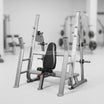
2. The Incline Pec Fly
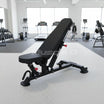
- The Machine: Excel Plate Loaded Incline Pec Fly
- Target Region: Clavicular head (upper chest) of the pectoralis major.
- Proper Form & Technique: Sit back against the incline pad. Because the muscle fibers of the upper chest run obliquely from the collarbone down to the arm, you must align the movement path with this upward angle. Keep your chest high and drive the handles upward and inward. Avoid letting your shoulders shrug upward toward your ears; keeping your traps relaxed ensures that the clavicular head does the heavy lifting.

3. The Decline Pec Fly
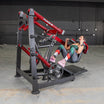
- The Machine: Power Leverage V2 Decline Chest Fly
- Target Region: Lower sternocostal portion of the pectoralis major.
- Proper Form & Technique: Secure your legs in the decline rollers. Electromyography (EMG) studies indicate that a decline angle specifically optimizes recruitment of the lower sternal fibers while minimizing upper chest involvement (Optimizing Development, 2010). Focus on sweeping the handles downward and inward toward your lower torso. Be careful not to excessively arch your lower back off the pad, which changes the joint angle and shifts tension away from the lower chest.

Section 2: The Seated Pec Deck Fly
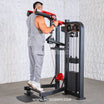
The seated pec deck is one of the most efficient isolation movements available, often producing chest activation levels that rival or exceed the traditional bench press because it removes the need to balance a free weight.
- The Machine: Power Leverage V2 Seated Pec Fly / Rear Delt Machine
- Target Region: Global pectoralis major, with high activation at the peak contraction point.
- Proper Form & Technique:
- Seat Height: Adjust the seat so that when you grip the handles, your hands and elbows are slightly lower than or parallel to an imaginary line running across your mid-chest (Rocha Júnior et al., 2007). Setting the seat too low forces the shoulders into excessive external rotation, increasing injury risk.
- The Set-Up: Press your head, upper back, and glutes firmly against the pad. Just like the lying variations, aggressively retract your shoulder blades.
- The Execution: Push through your palms to initiate horizontal adduction. As you bring the handles together, visualize driving your inner elbows toward one another rather than just moving your hands. This cue maximizes peak muscle shortening.
- The Stretch Phase: Control the eccentric (lowering) phase strictly. Do not let the weight stack slam or force your arms past your natural range of motion, as overextending can strain the anterior shoulder capsule.

Section 3: Cable Flys (Dual Adjustable Pulley & Cable Crossover)
Cables offer an unvarying, continuous resistance vector that you can fully customize by changing the pulley height. Because the cables pull outward against your arms even when your hands meet, they provide the most intense peak contraction of any fly variation.
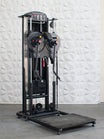
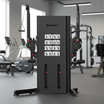
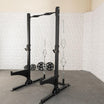
- The Equipment: Dual Adjustable Pulley or Megatron Deluxe Cable Crossover
- Target Region: Highly versatile depending on pulley height (High-to-Low targets lower chest; Low-to-High targets upper chest).
- Proper Form & Technique:
- Stance and Base: Stand dead-center between the cable towers. Take a sturdy staggered/split stance (one foot forward, one foot back) and brace your core. This counterbalances the forward pull of the weight and keeps your torso stable.
- Torso Position: Hinge slightly forward at the hips (about 15–20 degrees) while keeping a flat, neutral spine. Avoid using momentum or swinging your torso back and forth to move the weight.
- The Movement Arc: With a soft bend in the elbows, sweep your arms forward in a wide hugging motion. To get the absolute most out of the cable's unique tension profile, slightly cross your hands over one another at the end of the movement (the "X-Cross" technique). This maximizes the horizontal adduction capacity of the pectoralis major.
- Tempo Control: Hypertrophy is highly dependent on Time Under Tension (TUT) and controlling the eccentric phase. Spend 2 to 3 seconds slowly returning the cables back to the starting position to maximize microtrauma and growth factors in the chest fibers.


Summary Checklist for Perfect Pec Fly Form
- Retract the Scapulae: Always pin your shoulder blades back and down.
- Maintain the Elbow Angle: Keep a soft, fixed bend in your elbows; do not turn the fly into a press.
- Control the Eccentric: Never let the machine or cables violently snap your arms back into a stretch.
References
Bergquist, R., Iversen, V. M., Mork, P. J., & Fimland, M. S. (2018). Muscle activity in upper-body single-joint resistance exercises with elastic resistance bands vs. free weights. Journal of Human Kinetics, 61, 5–13. https://doi.org/10.1515/hukin-2017-0137
Optimizing Development of the Pectoralis Major. (2010). The Sport Journal. https://thesportjournal.org/article/optimizing-development-of-the-pectoralis-major/
Rocha Júnior, V. d. A., Gentil, P., Oliveira, E., & Carmo, J. d. (2007). Comparação entre a atividade EMG do peitoral maior, deltóide anterior e tríceps braquial durante os exercícios supino reto e crucifixo. Revista Brasileira de Medicina do Esporte, 13(1), 51–54. https://doi.org/10.1590/s1517-86922007000100012

Dejar un comentario
Todos los comentarios se revisan antes de su publicación.
Este sitio está protegido por hCaptcha y se aplican la Política de privacidad de hCaptcha y los Términos del servicio.